
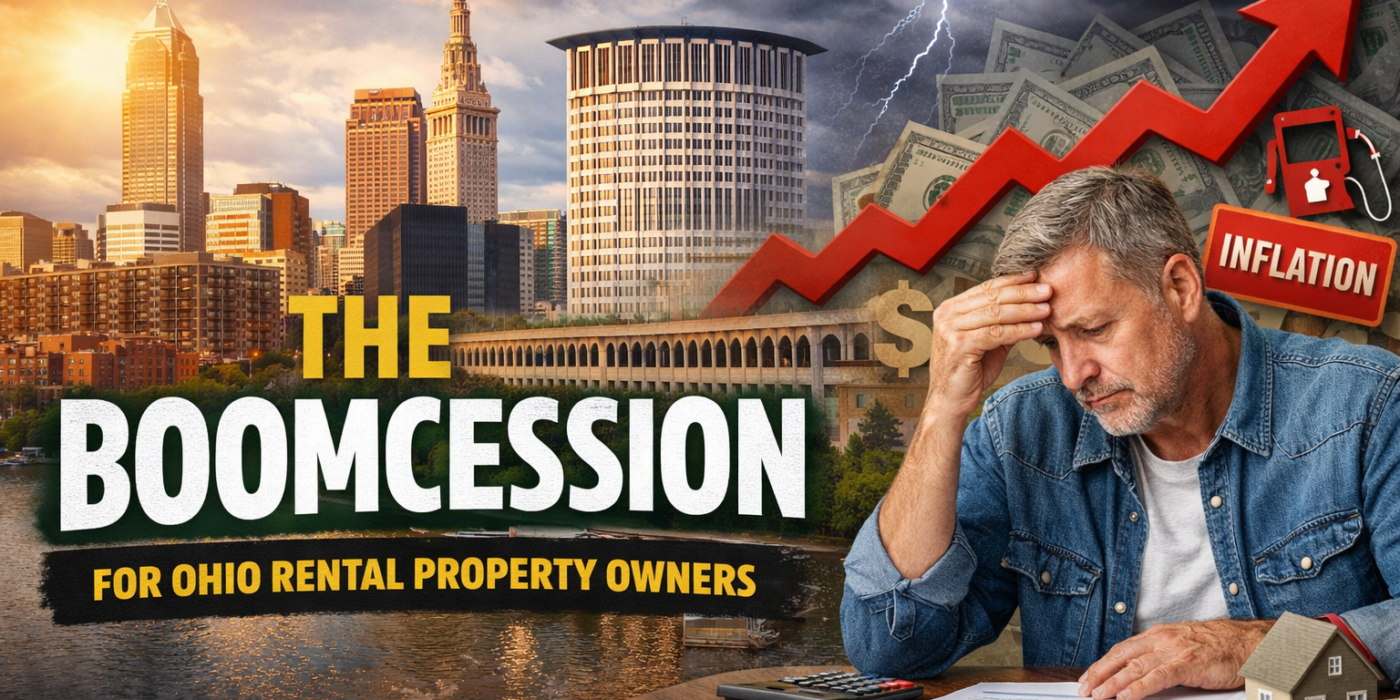
The Boomcession For Ohio Rental Property Owners
The U.S. economy is sending mixed signals right now. On paper, things look strong. Employment is relatively stable, consumer spending in dollars continues, and asset prices like stocks and real estate remain elevated. But many Americans feel financial pressure from rising costs and stagnant purchasing power. Economists have started calling this unusual environment a “boomcession.”
For Ohio rental property owners, this economic contradiction creates both challenges and opportunities.
What Is a Boomcession?
A boomcession combines the words boom and recession. It describes an economy that appears strong based on traditional metrics like GDP growth or stock market performance, while many households feel like they are experiencing a recession due to rising living costs and financial stress.
In other words, the economy may be technically expanding, but everyday expenses—housing, food, insurance, and utilities—are rising faster than many incomes. That disconnect explains why consumer confidence often feels weak even when the overall economy is growing.
For rental housing providers, this environment can feel like a balancing act.
Why Rental Demand Remains Strong in Ohio
Despite economic uncertainty, demand for rental housing across Ohio remains steady in many markets.
Several factors support this trend:
- Homeownership remains difficult.
High mortgage rates and elevated home prices have pushed many would-be buyers into the rental pool. Nationwide, renter households have continued growing in recent years as buying becomes less attainable for many families. - Large renter populations in urban areas.
Cities like Cleveland, Akron, and Columbus have long-standing multi-generational renter populations that rely on affordable housing options. - Government housing assistance programs.
A significant portion of renters in Northeast Ohio receive some form of assistance through programs such as housing vouchers, local subsidy programs, or nonprofit housing support. While these programs vary in reliability, they can provide an important financial safety net for many tenants.
This combination helps keep occupancy rates relatively stable, even when the broader economy feels uncertain.
The Pressure Landlords Are Feeling
While rental demand remains healthy, landlords are not immune to the pressures of the boomcession.
Operating costs for rental property owners have climbed significantly in recent years. Many owners are dealing with:
- Rising property insurance costs
- Higher maintenance and repair expenses
- Increased property taxes in some municipalities
- Inflation in labor and construction materials
These cost increases can squeeze cash flow, especially for smaller landlords or those who purchased properties recently at higher prices. In many cases, rents have increased—but not always enough to fully offset rising operating expenses.
The result is a period where returns may temporarily feel tighter, even when properties remain occupied.
Two Paths Forward for Property Owners
During uncertain economic cycles, property owners typically face two choices.
Option 1: Sell While the Market Is Still Strong
Owners who are financially stretched—or simply ready to move on—may want to consider selling before the busy summer selling season brings more competition to the market.
Working with a professional sales team like 5 Points Property Management can help landlords evaluate current property values and determine whether now is a good time to exit.
Option 2: Focus on Long-Term Wealth
For many investors, the better move is simply staying the course.
Real estate has always been a long-term wealth-building strategy, not a short-term emotional investment. Rental property owners who keep their focus on long-term goals—steady income, appreciation, and retirement cash flow—often benefit from holding through economic cycles like this one.
“The boomcession may create temporary discomfort, but rental housing remains one of the most resilient asset classes.”
The Bottom Line
Economic headlines may feel confusing right now, but one thing remains clear: people will always need places to live.
Whether you’re thinking about selling or simply optimizing your rental portfolio, the team at 5 Points Property Management can help. Contact us today for a free rental analysis or property valuation to see what your investment property could rent for—or sell for—in today’s market.