Tenant Screening Tips For Landlords
CategoriesTips For Landlords

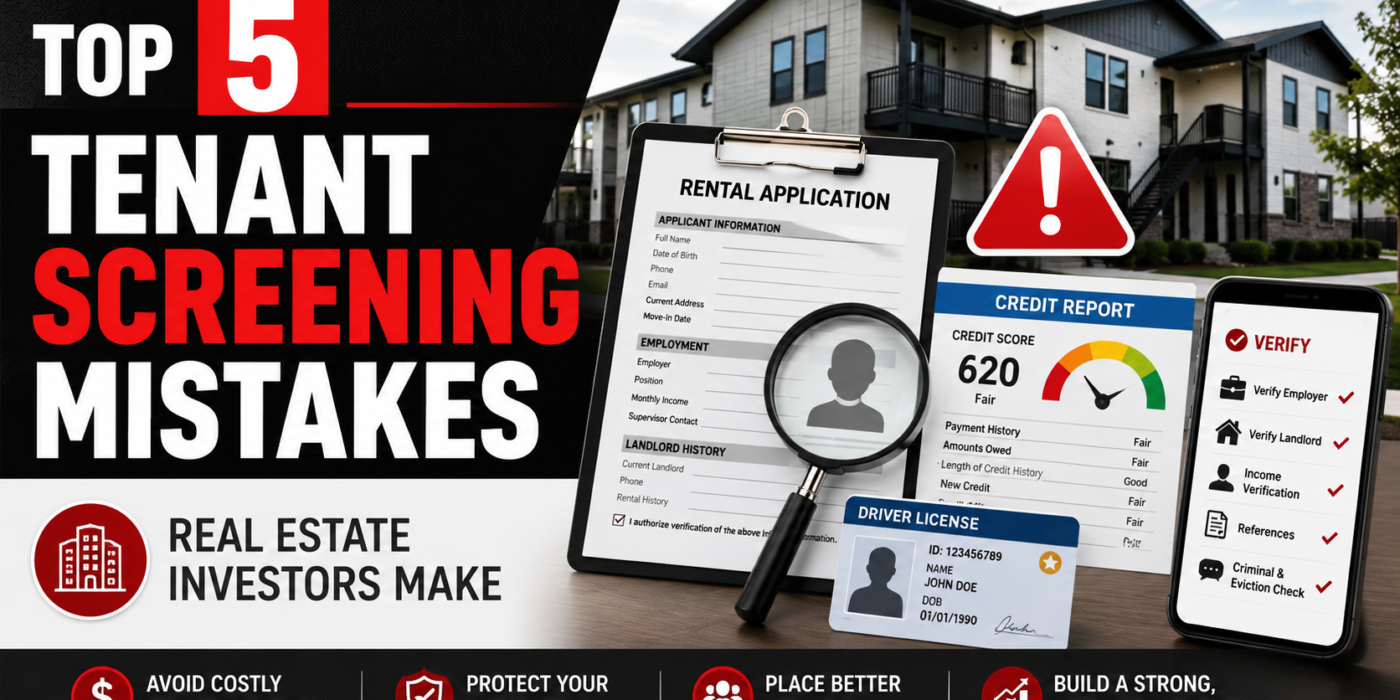
Top 5 Tenant Screening Mistakes Real Estate Investors Make

A rental property can look like a great investment on paper, but the wrong tenant can quickly turn a good property into a bad investment.

Unpaid rent, property damage, lease violations, legal expenses, and months of lost income can cost an investor thousands of dollars. That is why tenant screening should never be treated as simply pulling a credit report and checking whether an applicant has a decent score.

Good tenant screening is about verification, consistency, and understanding the complete picture.

Unfortunately, even experienced real estate investors make mistakes during the screening process.

Here are five of the biggest.

1. Running the Wrong Background Checks — or Using Information You Shouldn’t

One of the most dangerous tenant-screening mistakes is assuming:

“It’s public information, so I can use it.”

Not necessarily.

Landlords have to operate within federal, state, and local fair-housing, consumer-reporting, and privacy laws. Depending on the jurisdiction and circumstances, restrictions can apply to what information may be obtained, how far back information can be considered, and how that information may be used.

Criminal-history screening deserves particular attention. A blanket policy automatically rejecting anyone with any criminal history can create Fair Housing Act concerns, and state or local laws may impose additional restrictions.

Consumer reports used for tenant screening are also regulated by the Fair Credit Reporting Act (FCRA). If an investor takes an adverse action based partly or entirely on a consumer report—such as denying the application, increasing the security deposit, or requiring a co-signer—FCRA notice requirements may apply.

Investors should also be extremely careful about digging for information connected to protected characteristics or allowing information found online to influence a rental decision improperly.

The lesson: Don’t become an amateur private investigator.

Use a reputable tenant-screening provider, establish written screening criteria, apply those criteria consistently to every applicant, and make sure your process complies with federal, state, and local law.

When you’re unsure whether particular information can legally be requested, searched, or considered, consult qualified legal counsel familiar with landlord-tenant and fair-housing law in your jurisdiction.


2. Failing to Verify That All of the Information Actually Belongs to the Applicant

This is one of the most overlooked parts of tenant screening.

You order a credit or background report, receive several pages of information, see a credit score, and start making a decision.

But first ask:

Does everything on this report actually belong to this person?

Tenant-screening reports can contain errors. The FTC and CFPB have both warned about inaccurate information appearing in tenant background reports, including records that can be incorrectly associated with an applicant.

Before evaluating the report, compare the identifying information throughout the application and screening documents.

Look at:

  • Full legal name and spelling
  • Previous names or aliases
  • Date of birth
  • Social Security information where lawfully obtained and used
  • Current address
  • Previous addresses
  • Employment information
  • Rental history
  • Other identifying information contained in the report

Then ask whether the information adds up.

For example, if an applicant says they have lived in Cleveland for five years but the credit report shows recent addresses in three other states, that does not automatically mean the applicant should be rejected.

It means:

Ask another question.

There may be a perfectly reasonable explanation—or you may have discovered incorrect information, identity theft, an incomplete application, or information belonging to someone with a similar name.

Screening isn’t just about finding information.

It’s about verifying that you’re looking at the right person’s information in the first place.


3. Failing to Actually Verify Employment and Income

An applicant writing an employer’s name and telephone number on an application is not employment verification.

Investors sometimes see:

Employer: ABC Manufacturing
Income: $5,200 per month

…and move on.

That is not enough.

Employment should be independently verified whenever legally appropriate.

Confirm things such as:

  • Does the company actually exist?
  • Does the applicant actually work there?
  • Is the contact information legitimate?
  • Does the job title reasonably match what was reported?
  • Is the income consistent with the documentation provided?
  • How long has the applicant worked there?

Whenever possible, obtain appropriate written verification in addition to verbal confirmation.

Pay stubs, employment verification documents, tax documentation for self-employed applicants, bank records when appropriate and lawfully requested, and other acceptable documentation can help establish whether the applicant’s claimed income is real.

Also beware of one increasingly common problem:

Fake verification contacts.

Don’t assume the phone number written on the application belongs to the company’s HR department.

Independently locate the employer’s legitimate contact information whenever possible.

A professional screening process doesn’t merely ask applicants for information.

It verifies it.


4. Failing to Call Previous Landlords — and Verify the Landlord Is Real

Rental history can tell you things that a credit score never will.

Did the tenant pay on time?

Did they take care of the property?

Were there repeated lease violations?

Did unauthorized people or animals occupy the property?

Did the tenant provide proper notice before leaving?

Would the landlord rent to them again?

Those are important questions.

But there is another step many investors miss:

Verify the landlord.

An applicant who knows you’re going to call a “previous landlord” could potentially give you the telephone number of a friend or family member.

Before relying on a landlord reference, independently verify that the person you are speaking with has a legitimate connection to the property.

Property ownership records, management-company information, previous addresses appearing in the applicant’s screening records, and other lawful sources can help you confirm the relationship.

When possible, obtain written rental verification as part of the file as well.

And don’t rely exclusively on the current landlord.

There are situations where a current landlord may have an incentive to give a troublesome tenant a glowing recommendation simply because they want that tenant to move.

A previous landlord who already received possession of the property may sometimes provide a more candid assessment.

The goal isn’t to find reasons to reject someone.

The goal is to verify the history the applicant provided.


5. Looking at the Credit Score Instead of the Credit History

This may be the biggest financial screening mistake of all.

Suppose one applicant has a 690 credit score and another has a 640.

Which is the better tenant?

You don’t know yet.

A credit score is only a number summarizing certain information contained in a credit file. It doesn’t tell the complete financial story.

Instead of asking only:

“What’s the score?”

Ask:

“Why is the score what it is?”

Look deeper.

How does the applicant handle housing obligations?

Housing-related payment history can tell you more about rental risk than whether someone was late on an unrelated account several years ago.

How much debt are they carrying?

A person can earn good money but still have very little available cash every month because of car payments, credit cards, loans, child-support obligations, or other recurring expenses.

Are there recent late payments?

One old problem followed by several years of responsible behavior tells a different story than multiple late payments during the last six months.

Is there a pattern?

One isolated collection is different from ten collections.

A past financial setback is different from an ongoing pattern of failing to pay obligations.

What is happening right now?

An applicant’s current income, debt obligations, housing expenses, reserves, and payment patterns often matter more than simply chasing a particular credit-score cutoff.

Two people with the same credit score can have completely different financial situations.

Smart investors don’t screen a number.

They screen the story behind the number.


Tenant Screening Is About Verification, Not Assumptions

The purpose of tenant screening isn’t to find the applicant with the highest credit score.

It’s to make an informed, consistent, legally compliant decision about whether someone appears capable and willing to meet the obligations of the lease.

That means following a repeatable process:

Verify identity.
Verify income.
Verify employment.
Verify rental history.
Understand the credit history.
Follow fair-housing and consumer-reporting laws.
Document the decision.

And most importantly:

Apply the same written screening standards consistently to every applicant.

A few extra minutes spent verifying an application can potentially save months of headaches after someone moves into the property.

For real estate investors, tenant screening shouldn’t be viewed as paperwork.

It is risk management for one of your most valuable assets.

A Final Note for Rental Property Owners

Tenant-screening laws are not identical everywhere. Federal requirements such as the Fair Housing Act and Fair Credit Reporting Act may apply, while states and municipalities can impose additional restrictions. The FTC confirms that landlords using consumer reports for housing decisions have specific obligations under the FCRA, particularly when taking an adverse action based on a screening report.

Before establishing or changing your screening standards, make sure your policies comply with the laws where your rental property is located.

Good property management begins long before a tenant receives the keys. It begins with a disciplined screening process.

Investing in Euclid OH
Categories5 Points Blog

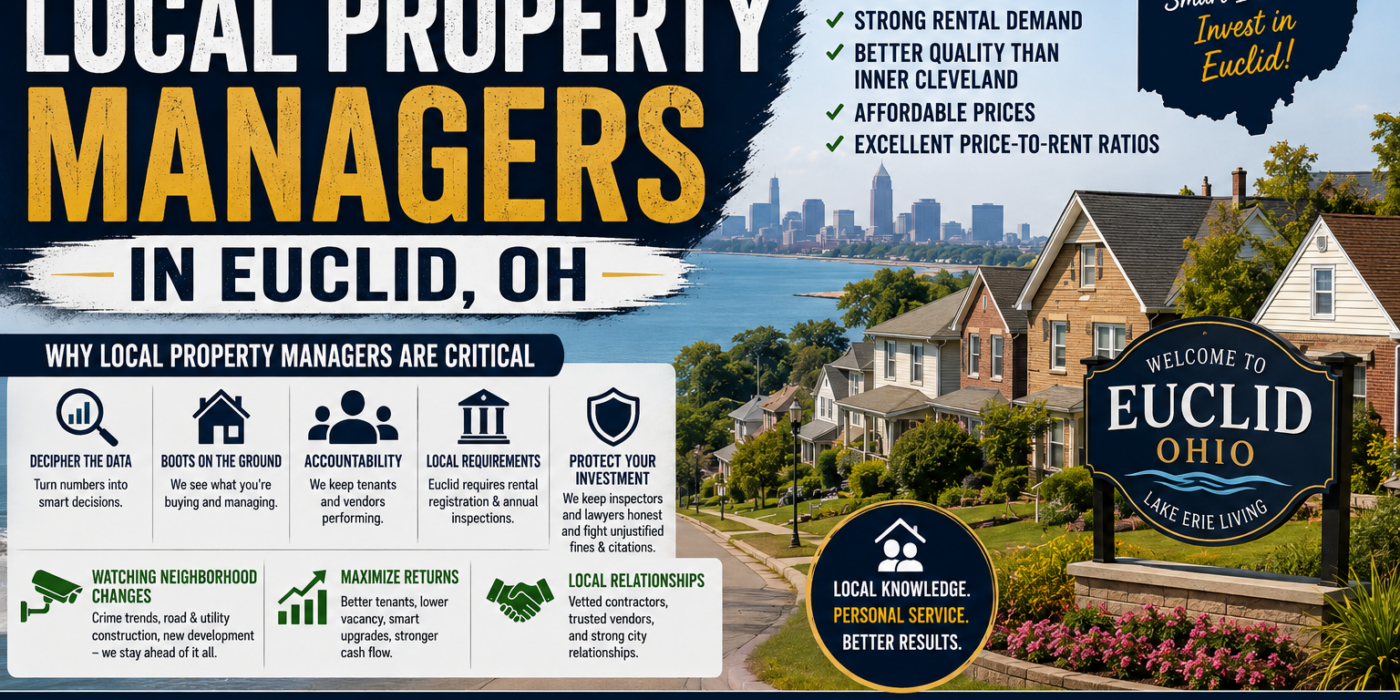
Why Cleveland Investors Need Local Property Management in Euclid, OH

Euclid, Ohio is one of the more interesting rental property investment markets in Greater Cleveland.

For investors coming from California, Florida, New York, or even across Ohio, Euclid can look almost too good on paper.

You can still find properties at prices that are dramatically lower than many major U.S. markets, while rents can support attractive price-to-rent ratios. And compared with many inner-city Cleveland neighborhoods, Euclid offers an established suburban environment, mature housing stock, Lake Erie access, and proximity to major employment centers.

As of June 2026, Zillow puts Euclid’s typical home value around $150,219, while its rental data shows average rents around $1,310–$1,400, depending on the dataset and property type. Realtor.com reports a median rent of approximately $1,400.

That combination is exactly why investors across the country continue looking at rental properties in Euclid, OH.

But there’s a catch.

You need to understand the neighborhood—not just the numbers.

Why Local Property Management in Euclid Matters

Buying a rental property in Euclid from 500 miles away is easy.

Knowing whether you bought the right property is much harder.

A local Euclid property management company can provide boots-on-the-ground intelligence that Zillow, Redfin, spreadsheets, and investment calculators simply cannot.

1. Data Doesn’t Tell You Everything

Two houses can have nearly identical financial projections and produce completely different results.

A local property manager can help investors understand:

  • Which streets attract better tenants
  • Which properties rent faster
  • What condition renters actually expect
  • Which improvements produce the best return
  • Where maintenance problems are common
  • How much rent a particular house can realistically achieve

That’s the difference between property data and local intelligence.

2. You Need Someone Seeing What You’re Buying

For out-of-state investors, this is critical.

A local property manager can walk through the property before or after acquisition, inspect the actual condition, identify potential problems, and help determine whether the proposed renovation makes economic sense.

Pictures don’t always reveal the whole story.

Neither does an inspection report.

Someone who manages rental homes throughout Euclid, OH knows what they’re looking at because they see these properties every week.

3. Tenants And Contractors Need Accountability

Property management isn’t just collecting rent.

It’s keeping everyone accountable.

A good local property manager has systems for:

  • Tenant communication
  • Rent collection
  • Property inspections
  • Maintenance response
  • Vendor coordination
  • Lease enforcement
  • Turnovers
  • Preventative maintenance

This matters enormously when you live outside Ohio.

A contractor who knows someone is physically checking the work behaves differently from one who believes nobody will ever see the finished product.

4. Euclid Has Real Local Compliance Requirements

Euclid isn’t a market where an absentee owner can simply ignore local requirements.

The city requires rental registration, and Euclid’s Neighborhood Engagement materials state that rental properties undergo annual inspections to ensure they remain up to code. The city’s Building & Housing Department conducts inspections related to changes of ownership, complaints, and compliance with state and local property-maintenance codes.

Euclid also maintains specific rental, vacant-property, point-of-sale, plumbing, HVAC, and other permit processes.

Having someone local who understands these processes can prevent a small compliance issue from becoming a major financial problem.

5. Local Experience Helps When Inspections Get Complicated

Property owners sometimes feel that inspectors, municipalities, or attorneys are being overly aggressive.

Whether a citation is justified or not, an absentee owner is at a disadvantage if they don’t understand local procedures.

A local property manager can be present, document the condition of the property, communicate directly with the appropriate city departments, understand what is actually required, and involve qualified legal counsel when necessary.

That’s not about ignoring legitimate violations.

It’s about making sure your property is treated fairly, your rights are understood, and unnecessary costs aren’t simply accepted because you’re 500 miles away.

6. Neighborhoods Change

Euclid is not static.

Road construction, utility projects, new development, crime trends, commercial investment, housing turnover, and changing renter preferences can all affect individual streets and neighborhoods.

A local property manager sees those changes happening.

That information can influence whether you should:

Buy, renovate, hold, raise rents, sell—or look somewhere else.

The Bottom Line

Euclid remains an attractive market for investors looking for affordable acquisition prices, strong rental demand, and the potential for long-term appreciation.

But the best property management in Euclid, OH is about much more than collecting rent.

It’s about having someone on the ground who understands the properties, the tenants, the contractors, the city, and the neighborhoods.

For an investor building a portfolio from outside Greater Cleveland, that local knowledge can be the difference between owning a property that merely looks good on a spreadsheet and owning one that actually performs.

The numbers may get you interested in Euclid. Local property management can help you make those numbers work.

Cleveland Rental Property Investing
Categories5 Points Blog

Why Cleveland Rental Property Investors Still Need Human Property Managers

Technology has transformed the rental housing industry.

Owners can log into dashboards from anywhere in the world. Tenants can pay rent online. Maintenance requests can be submitted through mobile apps. Artificial intelligence can even answer basic questions around the clock.

Those innovations are making property management more efficient.

But here’s the reality:

Technology is a tool—not a replacement for experience.

When your investment property, cash flow, and long-term wealth are on the line, knowledgeable people still make better decisions than software alone.

Great Technology Still Needs Great People

Today’s property management software provides incredible convenience.

Owners enjoy:

  • 24/7 online access to financial reports
  • Real-time maintenance updates
  • Digital lease documents
  • Online rent collection
  • Performance dashboards

These tools save time.

But numbers alone don’t tell you what you should do next.

That’s where experienced property managers provide value.

A dashboard can show declining cash flow.

A seasoned property manager can explain why, recommend solutions, and help you build a strategy to improve returns.

AI Isn’t Customer Service

Many property management companies have introduced AI-powered maintenance chatbots to assist tenants.

These systems can be helpful for:

  • Collecting maintenance requests
  • Answering basic questions
  • Routing emergencies
  • Scheduling appointments

However, not every maintenance issue fits neatly into a chatbot conversation.

Tenants experiencing water leaks, heating failures, family emergencies, or unusual repair situations often want reassurance from another human being.

When technology creates frustration instead of solutions, resident satisfaction suffers.

The best companies use AI to improve efficiency—but still make experienced team members readily available whenever a tenant needs personalized assistance.

Experience Sees What Software Doesn’t

Artificial intelligence analyzes data.

Experienced property managers analyze situations.

There’s a difference.

A property manager with twenty years of Cleveland market experience understands things no spreadsheet can fully capture, including:

  • Which streets consistently outperform others
  • Which contractors reliably deliver quality work
  • Which renovations generate the highest return on investment
  • Which applicants look excellent on paper but raise practical concerns during the leasing process
  • When it’s smarter to retain a struggling tenant instead of filing an expensive eviction
  • How to navigate changing market conditions through both strong and challenging economic cycles

That type of judgment comes from thousands of real-world decisions—not simply historical data.

Investing Is Bigger Than Individual Decisions

Successful investing isn’t just about filling vacancies.

It’s about building a long-term strategy.

Experienced property managers help investors:

  • Prioritize capital improvements
  • Increase rents strategically
  • Reduce operating expenses
  • Protect property values
  • Minimize vacancy
  • Plan acquisitions
  • Avoid costly mistakes

Technology may optimize one task.

An experienced advisor connects all of those decisions into a strategy designed to build wealth over decades.

Local Knowledge Still Matters

The internet has never contained more real estate information than it does today.

Unfortunately, not all of it is accurate, current, or applicable to your neighborhood.

AI tools can summarize large amounts of information quickly, but they don’t personally inspect homes, meet contractors, attend court hearings, or walk neighborhoods every day.

Local property managers do.

They understand which streets are improving, which contractors consistently perform, how local municipalities enforce housing regulations, and what today’s renters actually want—not just what a national database suggests.

When you’re investing hundreds of thousands of dollars, that local knowledge can be invaluable.

The Best Future Is Human + Technology

The future of property management isn’t people versus technology.

It’s people using technology better than ever before.

Smart software makes communication faster.

AI helps automate repetitive tasks.

Digital tools improve transparency.

But experienced professionals still provide the judgment, relationships, local expertise, and strategic thinking that technology alone cannot replace.

The Bottom Line

Technology has made owning rental property easier than ever.

It has not made experienced property managers obsolete.

In fact, it has made them even more important and valuable, as investors need help cutting through even more noise and misinformation than ever before.

The best investment decisions still require human judgment, local market knowledge, and years of practical experience.

The most successful Cleveland investors don’t choose between technology and people.

They choose a property management company that combines both—using modern tools to improve efficiency while relying on experienced professionals to protect their investments, maximize returns, and help them build lasting wealth.

Euclid Oh for Landlords
Categories5 Points Blog

Investing In Euclid, Ohio: A Brief History And What Today’s Rental Property Investors Should Know

For decades, Euclid, Ohio has been one of Greater Cleveland’s most recognizable suburbs for rental property investors. Offering affordable single-family homes, proximity to Lake Erie, and easy access to Downtown Cleveland, Euclid has long provided opportunities for landlords seeking strong cash flow without paying premium prices.

Like many mature suburbs, however, Euclid has evolved over the years. Understanding where it’s been—and where it’s headed—can help investors decide whether it belongs in their portfolio today.

A Community Built During Cleveland’s Boom

Founded in the early 1800s as a rural township, Euclid remained largely agricultural until Cleveland’s industrial expansion accelerated after World War II.

During the 1940s through the 1960s, thousands of middle-class families moved into newly constructed neighborhoods throughout Euclid. Manufacturing jobs, excellent highway access, and beautiful lakefront communities helped transform the city into one of Northeast Ohio’s premier suburbs.

Many of those solidly built brick and frame homes remain attractive rental properties today because they offer generous floor plans, mature trees, and established neighborhoods.

Home Values And Rents Have Climbed

Like much of Northeast Ohio, Euclid experienced significant appreciation following the pandemic-era housing boom.

According to Zillow’s Home Value Index, the average Euclid home value has risen to approximately $150,000, reflecting substantial gains compared with prices seen five years ago. Asking rents have also increased, with Zillow estimating average market rents around $1,300 per month, while Realtor.com reports median asking rents near $1,400 in 2026.

These increases have helped many long-term landlords build equity while improving cash flow through higher rental income.

Popular Euclid Neighborhoods

Not every part of Euclid performs the same.

Neighborhoods that often attract investor attention include:

  • Utopia Beach
  • Willohaven
  • Arbor Hills
  • Lloyd Road area
  • Lakefront neighborhoods north of Lakeshore Boulevard

Homes closer to Lake Erie often command stronger resale values and attract longer-term residents, while southern portions of the city generally offer lower acquisition costs and higher potential cash-on-cash returns.

As always, investors should evaluate individual streets—not simply ZIP codes.

Check out our Euclid, OH guide for rental property investors here

A Market That Has Changed

Like many first-ring suburbs surrounding Cleveland, Euclid has experienced demographic and economic changes over the past several decades. Investor perceptions of the city have also evolved as neighboring communities have changed, and some areas face higher crime and maintenance challenges than others. These factors can moderate both home values and rental growth relative to some eastern Lake County suburbs.

That doesn’t mean Euclid isn’t investable.

In fact, many landlords continue to achieve excellent returns by purchasing quality homes, maintaining them well, and carefully screening residents.

The key is buying the right property at the right price.

Looking Beyond Euclid

Many experienced investors still consider Euclid a solid medium-term investment, particularly for those focused on cash flow.

However, landlords seeking newer housing stock, higher household incomes, and tenants who typically require less intensive property management are increasingly expanding their searches into communities such as:

  • Willoughby
  • Wickliffe
  • Eastlake
  • Mentor

While acquisition prices are generally higher in these markets, investors often benefit from stronger appreciation potential, lower maintenance costs, and longer average tenant stays.

The Bottom Line

Euclid remains one of Northeast Ohio’s most established rental markets for investors seeking affordability and dependable rental demand.

For value-oriented investors willing to buy carefully and manage proactively, it can still produce attractive long-term returns.

But for landlords with larger acquisition budgets who prioritize newer homes, stronger demographics, and potentially lower management intensity, communities farther east—including Willoughby, Wickliffe, Eastlake, and Mentor—have become increasingly attractive destinations for new investment.

The smartest investors aren’t simply looking for the cheapest property. They’re looking for the market that best matches their long-term investment strategy, risk tolerance, and wealth-building goals.

Rental property maintenance
Categories5 Points Blog

Rental Property Maintenance Costs: When Cheap Contractors Cost You Everything

“If you can’t afford to do it right, you can’t afford to do it wrong.”

It’s one of the oldest sayings in construction—and one of the most expensive lessons rental property owners learn.

Too many Cleveland real estate investors try to save money by hiring the cheapest contractor they can find. On paper, it looks like they’re saving thousands.

In reality, they’re often setting themselves up for far greater losses.

Rule #1: Never Hire The Cheapest Contractor

Every investor wants to control expenses. That’s smart business.

But there’s a big difference between getting good value and buying the lowest bid.

The cheapest contractor is usually inexpensive for a reason:

  • Little or no insurance
  • Poor workmanship
  • Lack of experience
  • No quality control
  • Poor communication
  • Unreliable scheduling

A rental property isn’t just a building—it’s an income-producing asset. Every day a contractor delays your project is another day your investment isn’t making money.

Good, Cheap, or Fast—Pick Two

There’s an old saying in the construction industry:

You can have work that’s:

  • Good
  • Cheap
  • Fast

But you rarely get all three.

Quality contractors are in demand because they consistently produce quality results. They usually aren’t the cheapest, and they often aren’t immediately available.

That wait is frequently worth it.

Paying Twice Is Never Cheap

One of the most common mistakes property managers see is owners hiring the bargain contractor instead of the professional recommended by their property management company.

Unfortunately, many of these projects end exactly the same way.

The work fails inspection.

The repairs aren’t completed correctly.

The contractor disappears.

Then the owner hires the quality contractor they should have used from the beginning.

Now they’re paying twice.

And the final bill is often higher than if the quality contractor had simply completed the work initially.

One Cheap Plumbing Job Became A Financial Disaster

Imagine a real-world scenario.

A plumbing repair is quoted at $4,200 by an experienced licensed contractor.

An owner instead hires an out-of-town plumber willing to complete the work for $800.

Sounds like a bargain.

Until the plumbing fails.

The property floods.

Water damage creates mold.

A qualified tenant scheduled to move in cancels.

The owner now pays for:

  • Water mitigation
  • Mold remediation
  • Plumbing replacement
  • Additional drywall repairs
  • Lost rent
  • Extended vacancy
  • Marketing the property again

That $3,400 “savings” quickly turns into tens of thousands of dollars in losses.

Remote Hiring Can Become Extremely Expensive

This is especially common with out-of-state investors.

Owners living in California, Florida, Texas, or New York often try to manage Cleveland renovations remotely by hiring unknown contractors they find online.

Too often, the result is devastating.

Contractors collect large deposits…

…and disappear.

Or complete only part of the work before abandoning the project.

It’s not unusual for investors to lose $20,000–$25,000 or more on a failed renovation while the property sits vacant for months producing zero income.

By the time they finally hire a reputable contractor, they’ve paid:

  • The original contractor
  • The replacement contractor
  • Carrying costs
  • Utilities
  • Insurance
  • Property taxes
  • Six months of lost rental income

For some owners, that combination can threaten the entire investment.

Vacancy Is More Expensive Than Most Investors Realize

Every additional week of repairs can mean:

  • Lost rental income
  • Missed leasing season
  • Fewer qualified applicants
  • Additional utility costs
  • Increased vandalism or theft risk
  • Higher insurance exposure
  • Greater chance of deferred maintenance becoming larger repairs

Quality work completed on schedule often saves far more money than choosing the lowest estimate.

Invest Like A Business Owner

The goal isn’t to hire the most expensive contractor.

It’s to hire the contractor who delivers the best long-term value.

Professional property managers build relationships with contractors who consistently provide quality workmanship, fair pricing, proper licensing, and dependable scheduling because they’ve seen what happens when repairs are done incorrectly.

The Bottom Line

Every rental property owner wants to maximize profit.

Ironically, trying to save a few thousand dollars on repairs often creates losses many times larger.

Remember:

  • Never hire a contractor based solely on price.
  • Cheap repairs often become expensive repairs.
  • Vacancy is one of the highest costs in rental property ownership.
  • Quality workmanship protects both your property and your cash flow.

When it comes to maintaining your investment property, don’t overpay—but don’t be so cheap that it costs you far more than the quality option.

Because if you can’t afford to do it right the first time, you definitely can’t afford to do it twice.

Should you evict or work things our with your tenant?
CategoriesTips For Landlords

When NOT To Kick Out A Delinquent Tenant: The Landlord Math Behind Smart Investing

Every landlord eventually faces what we call The Great Eviction Dilemma.

A tenant falls behind on rent.

Now what?

For many rental property owners, the immediate reaction is emotional.

“They broke the lease.”

“They’re taking advantage of me.”

“I need them out immediately.”

While those feelings are understandable, acting on emotion instead of mathematics can become one of the most expensive decisions a real estate investor ever makes.

Remember Why You Bought The Property

Before filing an eviction, ask yourself one question:

Why did I buy this rental property?

Most investors answer with one of these:

  • Monthly cash flow
  • Passive income
  • Long-term appreciation
  • Building wealth

Notice what’s missing?

Winning an argument with your tenant.

Your rental property is an investment—not a personal relationship. Smart investors make decisions using spreadsheets, not emotions.

Do The Math Before Filing

According to industry estimates, the total cost of an eviction can range anywhere from $3,500 to well over $10,000, depending on attorney fees, court costs, lost rent, repairs, vacancy, and turnover expenses. In difficult situations involving significant property damage, those losses can climb substantially higher.

Before deciding to remove a tenant, calculate every potential cost:

  • Court filing fees
  • Attorney costs
  • Sheriff’s eviction fees
  • Lost rent during the eviction
  • Vacancy after move-out
  • Cleaning and repairs
  • Painting and flooring replacement
  • Marketing costs
  • Leasing commissions
  • Utilities during vacancy
  • Risk of vandalism or squatters
  • Time spent managing the turnover

Then ask yourself one simple question:

Would working with my current tenant cost less than replacing them?

If the answer is yes, the math says keeping them may be the better investment.

Bad Months Don’t Always Mean Bad Tenants

Life happens.

Good tenants can experience:

  • Medical emergencies
  • Job loss
  • Divorce
  • Family emergencies
  • Temporary disability
  • Unexpected expenses

Many of these residents recover within a few months.

When landlords demonstrate reasonable flexibility through payment plans or temporary arrangements, they often earn something incredibly valuable:

Loyalty.

A tenant who feels supported during a difficult season is often more likely to:

  • Stay for years
  • Pay consistently once recovered
  • Take better care of the property
  • Recommend the property to friends and family
  • Reduce costly turnover

Long-term occupancy is often worth far more than winning a short-term dispute.

Courts Don’t Always Reward Aggressive Landlords

Every local court system operates differently, but judges generally expect landlords to follow every legal requirement exactly.

Mistakes such as:

  • Improper notices
  • Illegal lockouts
  • Entering without proper notice
  • Self-help evictions
  • Mishandling security deposits

can delay your case, result in fines or penalties, or even require you to start the eviction process over.

In some jurisdictions, judges may also encourage payment agreements when tenants are making good-faith efforts to catch up.

Working with your tenant before filing may ultimately save everyone time and money.

Angry Tenants Can Become Expensive Tenants

Unfortunately, not every eviction ends peacefully.

An angry tenant may intentionally damage:

  • Drywall
  • Flooring
  • Appliances
  • Plumbing
  • Cabinets
  • Doors and windows

Repair costs can quickly reach tens of thousands of dollars—far exceeding the amount of unpaid rent that started the dispute.

Protecting your investment sometimes means de-escalating conflict rather than accelerating it.

There Are Times When Eviction Is The Right Choice

Being compassionate doesn’t mean ignoring serious problems.

Eviction or an agreed move-out may still be the best option when a tenant:

  • Is intentionally damaging the property
  • Creates significant legal or safety risks
  • Engages in criminal activity
  • Has no realistic ability to resume paying rent
  • Repeatedly violates the lease despite opportunities to improve

Even then, there may be better alternatives than a lengthy court battle.

Consider options such as:

  • Cash for Keys agreements
  • Early lease termination
  • Structured move-out timelines
  • Moving assistance
  • Referrals to local housing or financial assistance programs

These solutions can often cost less than a contested eviction while preserving the condition of your property.

The Bottom Line

Successful landlords understand that every investment decision should begin with one question:

What does the math say?

Sometimes filing an eviction is absolutely the right decision.

Other times, patience, flexibility, and creative problem-solving produce a better financial outcome.

Set aside your ego, calculate the true costs, follow the law, and treat people with dignity.

Being smart and being human are not mutually exclusive—and in real estate investing, they often produce the highest long-term returns.

To sell or not sell your rental property
Categories5 Points Blog

Real Estate Investors’ #1 Regret: Selling Their Rental Properties Too Soon

Ask experienced real estate investors about their biggest investing mistake, and you’ll hear the same answer surprisingly often:

“I wish I had never sold that property.”

It may sound simple, but it’s one of the most common lessons learned after years—or even decades—of investing.

Every rental property owner eventually faces temptation. A large repair bill, a vacancy, an unexpected roof replacement, or a slowing market can make selling seem like the obvious solution.

But history has shown that patience is often one of the most profitable investment strategies.

Short-Term Problems, Long-Term Wealth

Rental properties rarely produce identical returns every year.

Some years are incredible.

Others feel like nothing goes right.

You might experience:

  • A costly unit turn
  • A furnace replacement
  • Rising insurance premiums
  • Property tax increases
  • Unexpected vacancies

These events can make it feel like your investment is no longer worth keeping.

The problem is that many owners sell during the difficult years—just before the good years arrive.

Appreciation Is A Powerful Wealth Builder

While monthly cash flow is important, long-term appreciation has created tremendous wealth for rental property owners.

According to the Federal Housing Finance Agency (FHFA), U.S. home prices have increased dramatically over the past several decades despite recessions, interest rate spikes, and market corrections. Investors who held quality real estate through multiple market cycles have generally been rewarded with higher property values and increased rental income over time.

It’s easy to underestimate what another 10 or 20 years of appreciation can mean.

Many investors eventually look back and discover the duplex they sold for $125,000 is now worth $250,000—or more.

That appreciation is gone forever.

The Psychology Of Seller’s Remorse

Behavioral finance researchers have studied “regret aversion,” the tendency for investors to experience significant regret after selling an appreciating asset.

Research published in the Journal of Real Estate Research found that people often experience strong emotional regret when they later discover they sold before additional gains occurred.

It’s no different than hearing someone say:

“I sold it because I was tired of dealing with tenants.”

Or…

“I needed a new roof and didn’t want the headache.”

Five years later, they’re watching someone else collect the rent while the property’s value continues climbing.

Don’t Let Temporary Problems Drive Permanent Decisions

Every investment has seasons.

Instead of selling immediately, consider asking:

  • Is this simply a temporary vacancy?
  • Can rents be increased at renewal?
  • Are operating expenses being managed efficiently?
  • Could better property management improve performance?
  • Will this property likely be worth more in 10 years?

Often, the answer is yes.

Many “problem properties” simply need better management—not a “For Sale” sign.

Great Investors Think Long Term

Successful rental property owners understand that real estate is not a sprint.

It’s a marathon.

Some years produce outstanding returns.

Other years simply preserve your position while the market catches up.

The investors who build lasting wealth are usually the ones who stay invested long enough to experience both.

The Bottom Line

If your rental property is producing positive cash flow—or has the potential to with proper management—think carefully before selling because of today’s frustrations.

Repairs get completed.

Vacancies get filled.

Rents rise over time.

Property values appreciate.

The regret of writing a check for a new roof usually fades within a few months.

The regret of watching a property you sold double in value can last for decades.

Before you decide to sell, make sure you’ve explored every opportunity to improve your property’s performance. Sometimes the best investment decision isn’t buying another property—it’s simply holding onto the one you already own.

CategoriesTips For Landlords

It’s A Rollercoaster: How Investors Are Bracing For This Fall

Real estate investors know that market timing matters. While spring and summer often bring strong leasing activity and increased buyer demand, fall can feel like the first big drop on a rollercoaster ride.

Every year, many investors are surprised when showings slow down, buyer activity softens, and rental demand becomes more selective. The good news? Smart investors understand the seasonal cycle and position themselves accordingly.

Fall Is Historically A Slower Season

The housing market tends to follow predictable seasonal patterns.

According to data from the National Association of Realtors, home sales activity typically peaks during spring and summer before slowing in the fall and winter months. Buyers become distracted by holidays, school schedules, and year-end financial planning. As demand softens, sellers often find themselves reducing prices or offering concessions.

Rental housing follows a similar trend.

Most tenants prefer moving during spring and summer because:

  • School schedules are easier to manage
  • Weather conditions are better
  • Tax refunds often provide moving funds
  • Families want to settle before the next school year
  • Longer daylight hours make home shopping easier

As we move deeper into fall, tenant demand doesn’t disappear—but the pool of available renters generally becomes smaller.

Today’s Market Still Favors Landlords

Despite seasonal slowdowns, rental fundamentals remain strong.

National apartment vacancy rates remain relatively low by historical standards, and rents have risen significantly over the past several years. In many Northeast Ohio markets, well-priced rental homes continue to attract applications within days.

In fact, many professionally managed properties lease within a week when:

  • Pricing is accurate
  • The property is fully move-in ready
  • Professional photos are used
  • Showings are conducted promptly

This is why many experienced investors are choosing to secure strong tenants now rather than gamble on market timing.

The Risks Of Waiting

Some investors consider leaving a property vacant while exploring a future sale or refinance. Unfortunately, waiting can create unintended consequences.

For example, if a lender sees a property was recently listed for sale, it may raise additional questions during a refinance review. While every lender is different, recent listing activity can complicate financing discussions.

Additionally, many municipalities require a Point of Sale (POS) inspection before transferring ownership.

That creates another potential expense.

A typical investor may face:

  • Vacancy costs
  • Unit turn expenses
  • Repair costs identified during inspections
  • Permit fees
  • Compliance deadlines

In many cases, violations must be corrected within a relatively short timeframe, creating significant financial pressure.

What started as a simple sale strategy can quickly become an expensive project.

Focus On Cash Flow

The most successful investors focus on income first.

If your property is vacant today, locking in a qualified resident may be far more profitable than waiting months for a potential spring sale.

Strong tenants provide:

  • Consistent rental income
  • Reduced vacancy exposure
  • Better property care
  • Improved lender confidence
  • Predictable cash flow

Remember, vacancies produce a 100% loss on rent while you wait.

Preparing For Spring Starts Now

If selling remains your long-term goal, fall can still be a productive season.

Use this time to:

  • Complete deferred maintenance
  • Improve curb appeal
  • Increase operational efficiency
  • Evaluate rent levels
  • Review management performance

If your cash flow isn’t where it should be, consider implementing reasonable rent increases at renewal and ensuring your property management company is maximizing occupancy, controlling expenses, and protecting your investment.

The Bottom Line

Fall can feel like a rollercoaster for real estate investors, but seasonal slowdowns are nothing new.

Rather than chasing uncertain timing, many experienced investors are choosing to secure qualified tenants, lock in strong cash flow, and position their properties for maximum value next spring.

If your rental property isn’t producing the returns you expected, now may be the perfect time to evaluate your rents, reduce operational inefficiencies, and partner with a property management team that can help optimize your property’s performance year-round.

OH landlord tips. Property management in Cleveland
CategoriesTips For Landlords

The First 48: Why Intelligent Landlords Price Rentals Right And Make Sure They Are 100% Move-In Ready Before Listing

One of the most expensive mistakes rental property owners make isn’t a major repair, a bad contractor, or even a difficult tenant. It’s listing a rental property before it’s truly ready and pricing it incorrectly from the start.

Many landlords assume they can “test the market” with a high asking rent or finish small repairs after finding a tenant. Unfortunately, this approach often drives away the exact residents you want living in your property.

The Best Renters Shop Early

The most qualified renters typically begin searching well before they need to move. They have stable employment, good rental history, strong credit, and enough savings for deposits and moving expenses.

These renters often make decisions quickly.

In fact, industry leasing data consistently shows that the majority of listing activity, inquiries, and showing requests occur during the first 48 hours after a property hits the market.

That means your strongest tenant pool is usually looking at your property immediately after it is listed.

If your rental is overpriced or incomplete during that critical window, many of those renters will simply move on.

They may never come back.

Overpricing Can Cost More Than Underpricing

Some landlords believe starting high leaves room to negotiate. In reality, overpricing often causes a property to sit vacant longer and creates negative market perception.

When a rental remains available for weeks, prospective tenants begin asking questions:

  • Why hasn’t it rented?
  • Is something wrong with the property?
  • Is the landlord difficult to work with?
  • Will maintenance requests be ignored?

A rental priced appropriately from day one creates competition and attracts a larger pool of applicants.

Benefits include:

  • More qualified applicants
  • Faster lease-up times
  • Reduced vacancy costs
  • Better tenant screening options
  • Stronger long-term resident retention

Remember, the goal isn’t simply obtaining the highest rent possible. The goal is attracting a resident who pays consistently, follows the lease, and takes care of the property.

First Impressions Matter

A rental property should be presented exactly as the tenant will receive it after move-in.

That means:

  • All repairs completed
  • Fresh paint touch-ups finished
  • Landscaping cleaned up
  • Appliances working properly
  • Light fixtures operational
  • Safety issues addressed
  • Property professionally cleaned

Showing a property that is “almost ready” often backfires.

Prospective tenants begin creating mental lists of additional improvements they want completed. Others may assume the owner cuts corners or delays maintenance.

Some renters immediately begin negotiating:

  • “Can you replace all the flooring?”
  • “Can you upgrade the countertops?”
  • “Can you install different appliances?”

Instead of seeing a well-maintained home, they see a project.

The Relationship Starts Before The Lease

Many landlords don’t realize that the landlord-tenant relationship begins during the first showing.

When prospective residents walk into a clean, functional, move-in-ready home, they gain confidence that the owner takes pride in the property and will respond appropriately when issues arise.

When they walk into unfinished repairs, debris, maintenance problems, or promises of future work, trust begins to erode before the lease is even signed.

That poor first impression can lead to:

  • More complaints
  • More maintenance disputes
  • Less resident satisfaction
  • Shorter tenancy periods
  • Higher turnover costs

The Smart Landlord Approach

Successful landlords understand a simple principle:

Price the property correctly and present it perfectly.

The first 48 hours of marketing are often your best opportunity to attract high-quality tenants. Make sure your pricing is competitive, your photos showcase the property accurately, and the home is completely move-in ready before the listing goes live.

The result is often faster leasing, better residents, fewer headaches, and stronger long-term returns on your investment.

Iran War And Real Estate
Categories5 Points Blog

How the Iran War Is Driving Up Costs for Renters and Rental Property Owners

Global events have a way of hitting close to home—especially when it comes to housing costs. The ongoing conflict involving Iran is a prime example. While the war is thousands of miles away, its ripple effects are being felt by tenants and rental property owners across the United States.

Rising Energy Costs Are Fueling Inflation

At the center of the issue is energy. The conflict has disrupted global oil supply chains, particularly through the Strait of Hormuz, a critical route for nearly 20% of the world’s oil. (Wikipedia)

As a result, oil prices have surged, with U.S. gasoline prices jumping significantly in just a few months. (Reuters) These increases don’t just impact what you pay at the pump—they cascade through the entire economy.

Transportation costs rise. Shipping costs increase. Utility bills climb. And ultimately, those expenses show up in higher rents and tighter budgets for tenants.

Renters Are Feeling the Squeeze

For tenants, this inflation is hitting from multiple directions. Analysts are warning of a “second wave” of inflation tied to the war, extending beyond fuel into everyday goods like groceries, clothing, and household items. (Business Insider)

This means renters are now balancing:

  • Higher rent payments
  • Increased utility bills
  • Rising costs for essentials like food and personal care

Even modest price increases across multiple categories can significantly strain household budgets.

However, not all tenants will be impacted equally. Some renters—particularly those receiving housing assistance or other government support—may be more insulated from immediate financial shocks. In uncertain times, these tenants can actually become more stable, as their income sources are partially protected from market volatility.

Property Owners Face Rising Operating Costs

Rental property owners are also feeling the pressure. Inflation driven by the war is increasing costs across nearly every aspect of property management:

  • Fuel for maintenance crews and travel
  • Higher prices for building materials like plastics, copper, and steel
  • Increased labor costs as wages adjust to inflation

In fact, manufacturers are already raising prices on construction-related materials due to higher energy and raw material costs tied to the conflict. (Reuters)

This creates a compounding challenge: while tenants are stretched thinner, owners are facing higher expenses to maintain and improve their properties.

Why Waiting Will Cost You More

One of the biggest takeaways for property owners is timing.

Historically, inflation tied to geopolitical events doesn’t hit all at once—it builds over time. Early indicators show rising input costs, but broader increases in construction, renovations, and capital improvements are likely to accelerate later this year.

That means:

  • Roof repairs will cost more
  • Landscaping and exterior work will get pricier
  • Unit turns and renovations will become more expensive

Waiting could mean paying significantly more for the same work just months down the road.

A Strategic Approach Moving Forward

In times like these, proactive property management becomes critical.

Owners who act early—locking in labor, securing materials, and completing deferred maintenance—can stay ahead of inflation. At the same time, understanding tenant dynamics and affordability will be key to maintaining occupancy and long-term stability.

The bottom line: global conflict may be out of our control, but how we respond as investors and property managers is not. Acting now can protect both your assets and your cash flow in the months ahead.